













Manufacturing

Confidence in marketing performance starts with structured data

Accutics standardizes and validates campaign data across products, regions, business units, and partner ecosystems so marketing teams can connect activity to lead quality, pipeline, and revenue with greater confidence.

Marketing accountability in requires trusted marketing data

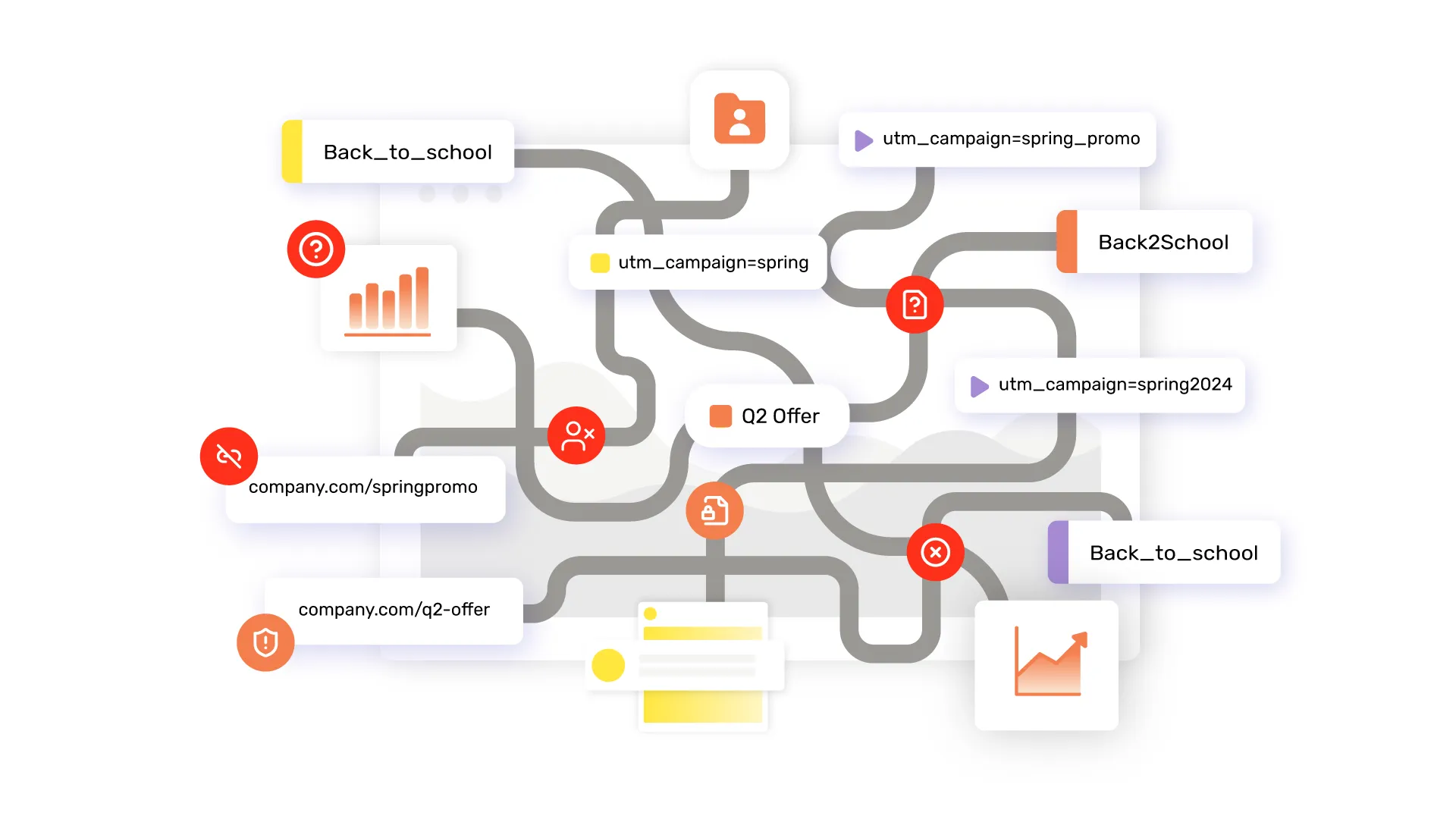
Manufacturing marketing leaders are expected to show how campaigns influence lead quality, pipeline creation, partner performance, and revenue across long and complex buying cycles. When campaign data varies across business units, performance becomes difficult to measure consistently and even harder to defend due to:

Dashboard mockup
Inconsistent campaign naming across products, regions, and partners
Misaligned KPIs across marketing, analytics, sales, and commercial
Manual reporting reconciliation across systems and stakeholders
Limited visibility into lead quality, pipeline, and revenue impact
Low trust in marketing data guiding investment decisions

AI and advanced performance marketing require trusted data

AI, attribution, and advanced performance analysis only create value when campaign data is structured and validated from the start. Without that foundation, organizations struggle to connect marketing activity to pipeline creation, sales outcomes, and partner effectiveness with confidence.

Structure that supports complex go-to-market models

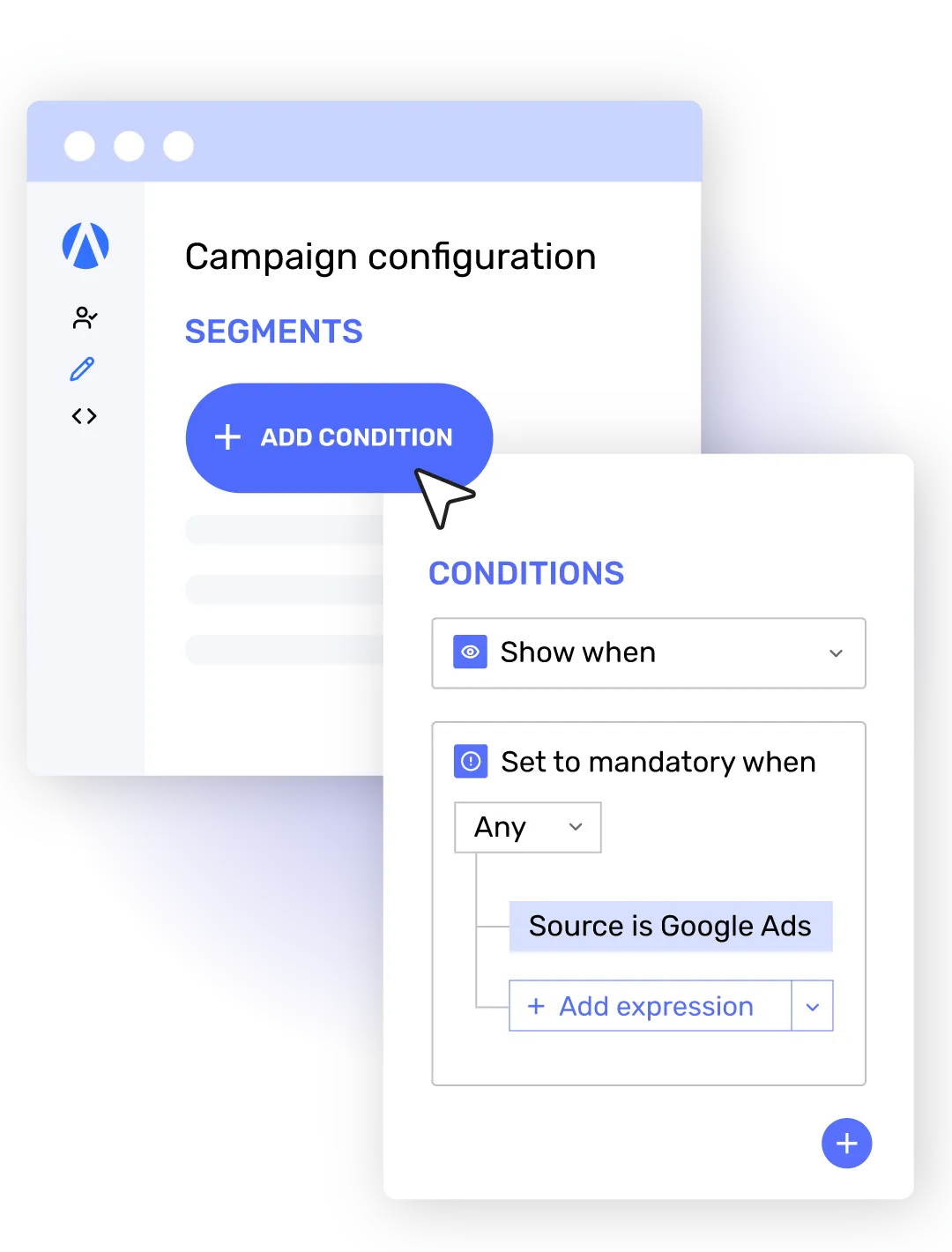
Accutics brings consistency to campaign data across products, regions, business units, and partner ecosystems, creating a shared structure for measuring demand generation, lead quality, and pipeline impact.
Dashboard mockup
Dashboard mockup

Validation at the point of execution

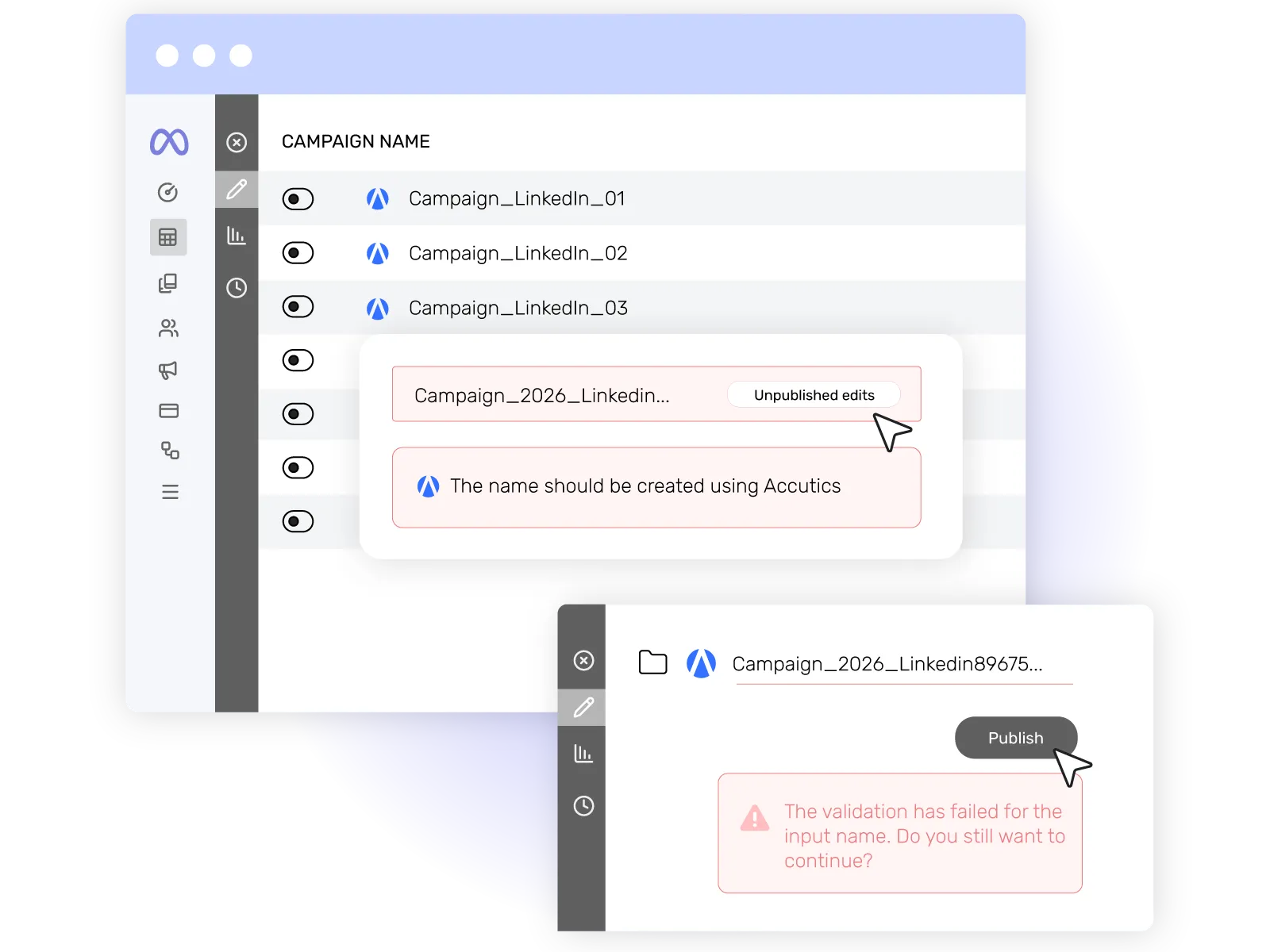
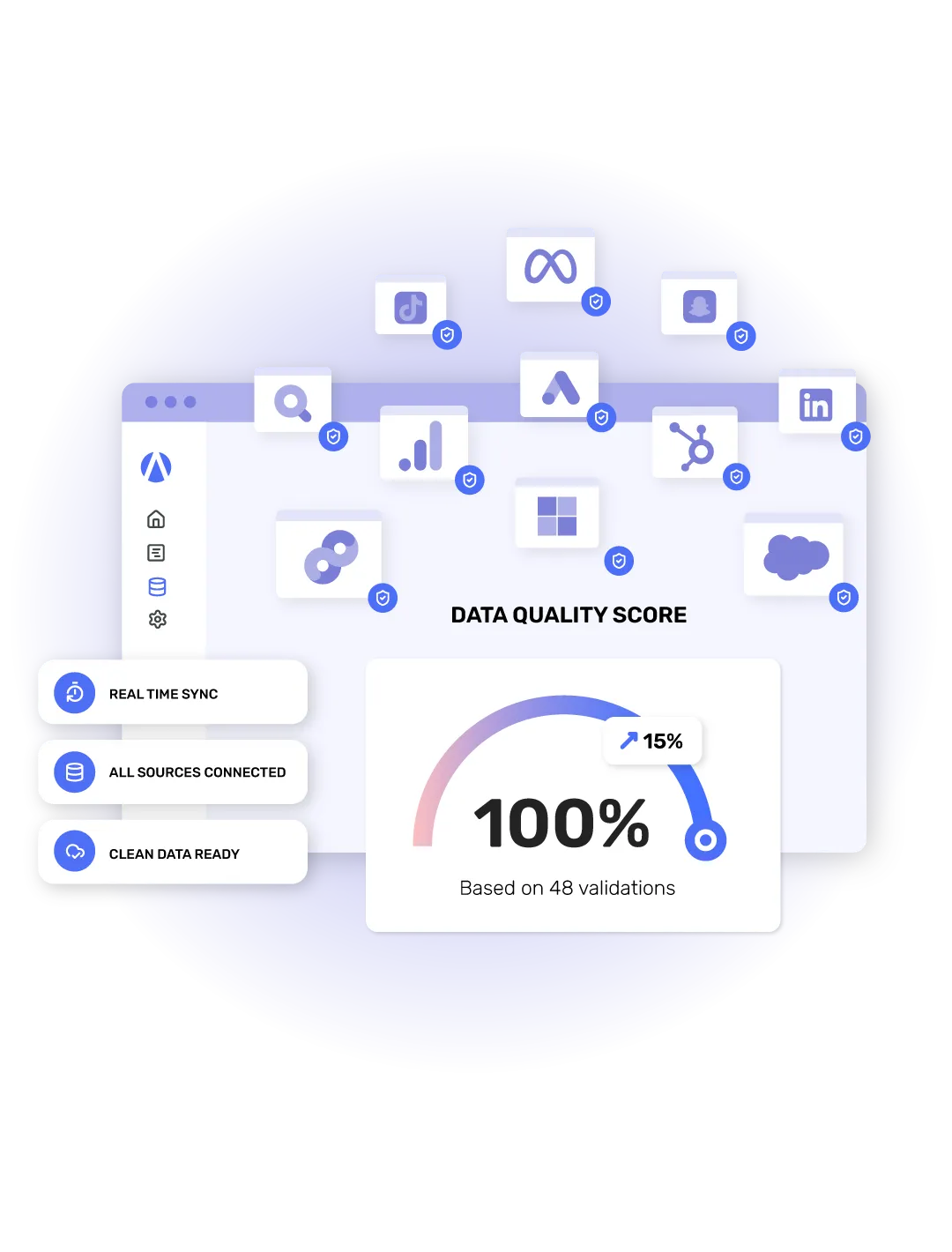
Accutics continuously validates campaign tracking against predefined standards as campaigns are created and launched. Errors are detected instantly and stopped before they reach analytics systems, ensuring clean, reliable data for reporting and decision-making.

Trusted performance reporting

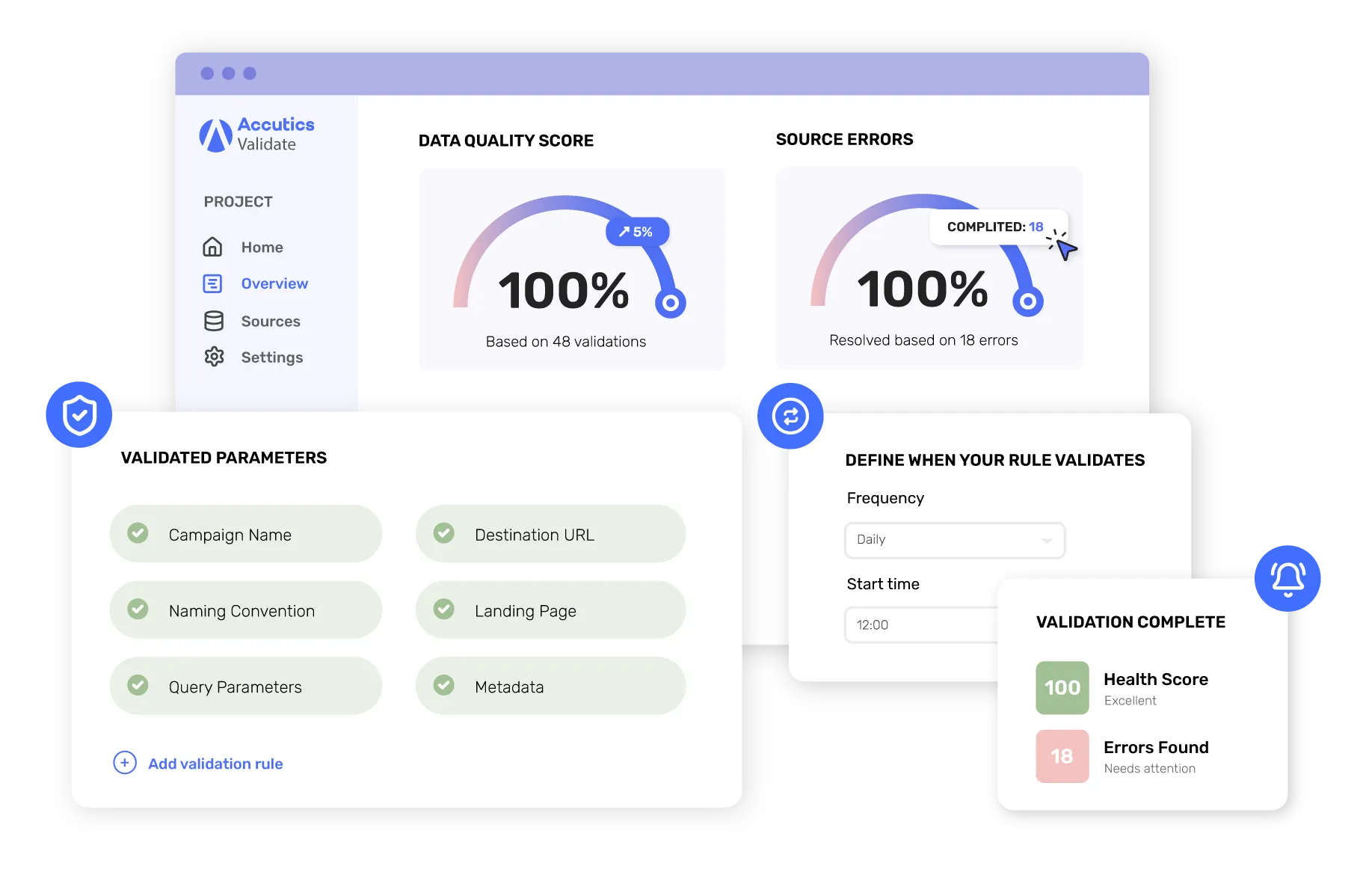
When campaign data is structured and validated at the source, reporting becomes more coherent across teams, systems, and markets. Marketing, analytics, and finance gain a clearer and more consistent understanding of performance, grounded in data they can trust.
Dashboard mockup
Dashboard mockup

Performance insight tied to pipeline and revenue

With structured, reliable data from the start, manufacturing teams can better understand what drives qualified demand, pipeline, and commercial outcomes, helping marketing measure performance with confidence and support revenue-focused decisions.

Proving marketing impact in manufacturing

Accutics enables manufacturing teams to build structured, reliable campaign data that brings greater consistency to performance measurement. The result is a clearer understanding of what drives qualified demand, pipeline, and revenue across the business.

Turning your marketing data
into business impact

When data is reliable, marketing can demonstrate its impact more clearly

Manufacturing organizations need a consistent view of how marketing drives demand, pipeline, and revenue across products and regions.

When campaign data is structured and consistent, marketing operates with greater clarity and control. Reporting aligns more effectively across teams, performance becomes easier to interpret, and marketing can demonstrate its contribution to pipeline and revenue with greater confidence.

Marketing teams gain consistent visibility across markets and channels, enabling faster and more confident optimisation decisions.
Leadership evaluates investment with greater confidence, using trusted data to connect spend to lead quality, pipeline, and revenue.
Performance becomes easier to interpret across long and complex buying journeys, strengthening alignment across teams.
With a clearer view of its contribution to pipeline and revenue, marketing plays a more meaningful role in product and commercial decisions.

FAQ

1. Why is it difficult to connect marketing to pipeline and revenue in manufacturing?
Manufacturing marketing operates across products, regions, business units, and partner ecosystems within long and complex buying cycles. Without a consistent campaign structure, differences in naming and tracking make it difficult to connect marketing activity to lead quality, pipeline creation, and revenue.
2. How does inconsistent campaign data impact lead quality and pipeline visibility?
When campaign data is fragmented, reporting often depends on manual reconciliation across systems and teams. This limits visibility into which campaigns drive qualified leads and pipeline progression, making it harder to evaluate performance and guide investment decisions.
3. How can manufacturing teams measure marketing performance across products, regions, and partners?
Measuring performance requires a shared campaign framework that standardizes naming, structure, and metadata across all products, regions, and partner programs. With consistent data, teams can compare performance and connect marketing activity to lead quality, pipeline, and revenue outcomes.
4. Why do AI and attribution models struggle in manufacturing marketing?
AI and attribution models depend on structured and reliable input data. In manufacturing, where buying journeys are long and involve multiple stakeholders and touchpoints, inconsistent campaign data prevents accurate connections between marketing activity, pipeline progression, and sales outcomes.
5. What changes when marketing data is structured and validated at the source?
When campaign data is consistent from the start, manufacturing teams gain a clearer view of what drives qualified demand, pipeline growth, and revenue. Performance becomes easier to interpret across products and regions, enabling more confident optimisation and commercial decision-making.

Explore the Accutics platform

/* Slider with pagination */