












Marketing accountability requires trusted marketing data
FMCG marketing leaders are expected to prove what is working across brands, markets, launches, shopper programs, and media investments. When campaign data varies by market, agency, and business unit, performance becomes difficult to compare, reporting becomes fragmented, and teams lose confidence in the numbers due to:
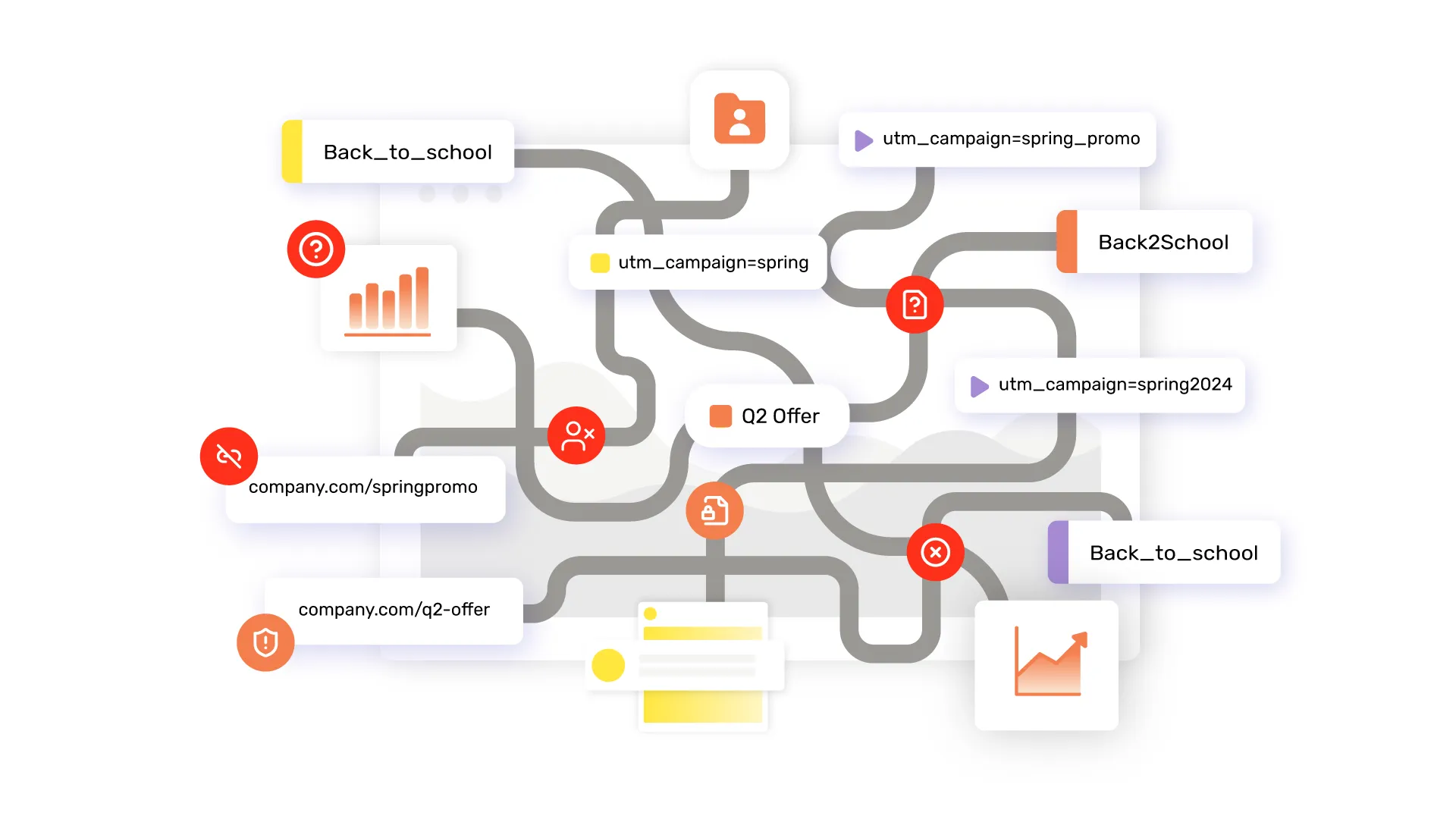
Inconsistent campaign naming across brands, markets, and partners
Misaligned KPI definitions between global, local, shopper, and media teams
Reporting dependant on manual fixes and reconciliation
No clear connection between campaign activity, launches, and investments
Low trust in the data used to guide cross-market decisions
AI and advanced performance marketing require trusted data
AI, Marketing Mix Modelling, incrementality, and advanced analytics depend on structured campaign data. Without a governed foundation, FMCG marketers struggle to connect brand activity, shopper marketing, and media investment to reliable decision-making.
Structure that enables cross-market performance measurement
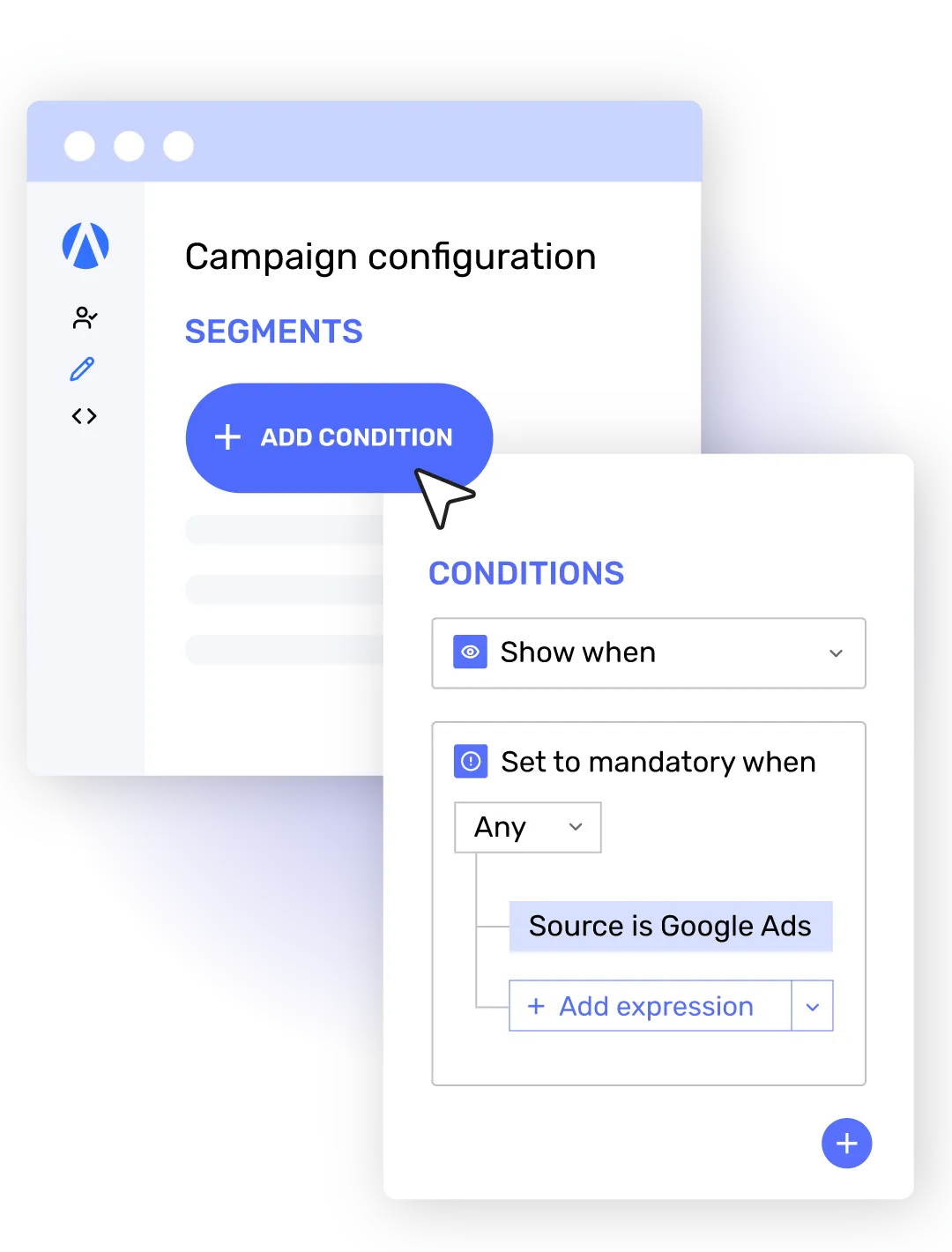
By defining and enforcing a unified campaign taxonomy across brands, markets, channels, and partners, Accutics ensures every campaign follows the same structure from creation, enabling a consistent basis for measuring performance.
Validation at the point of execution
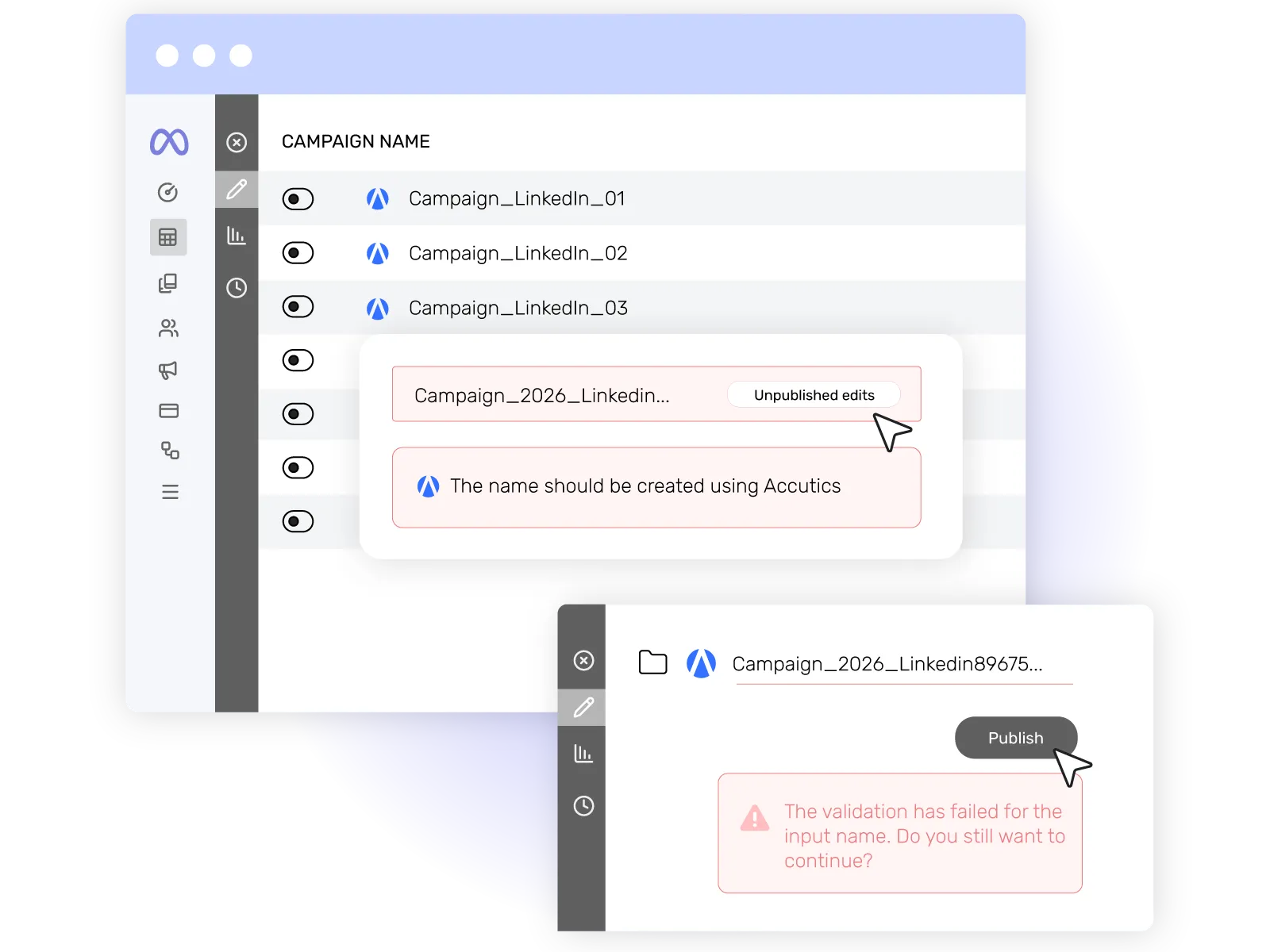
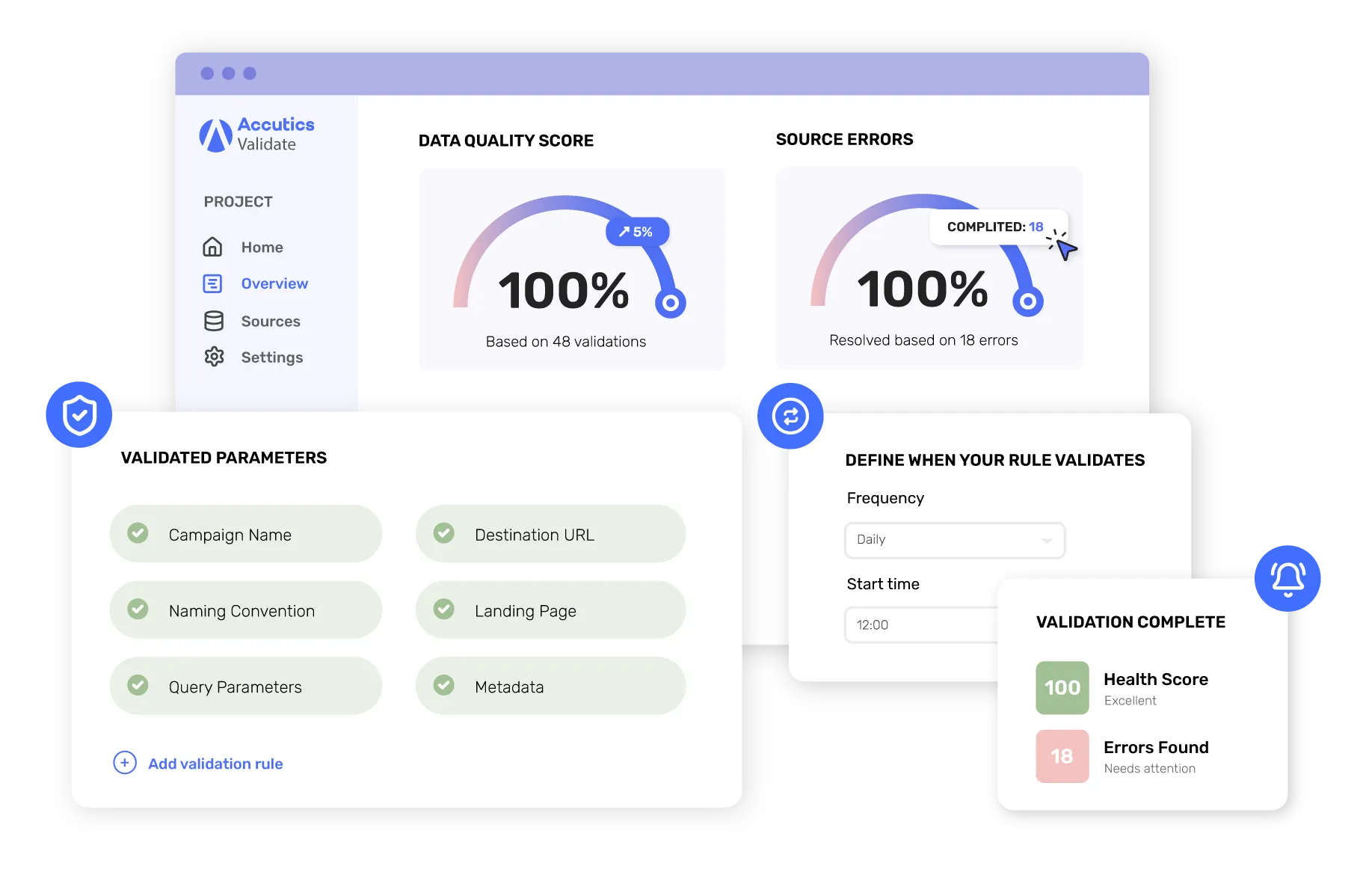
Accutics continuously validates campaign tracking against predefined standards as campaigns are created and launched. Errors are detected before they reach reporting systems, ensuring clean, reliable data across complex local execution and partner ecosystems.
Trusted performance reporting
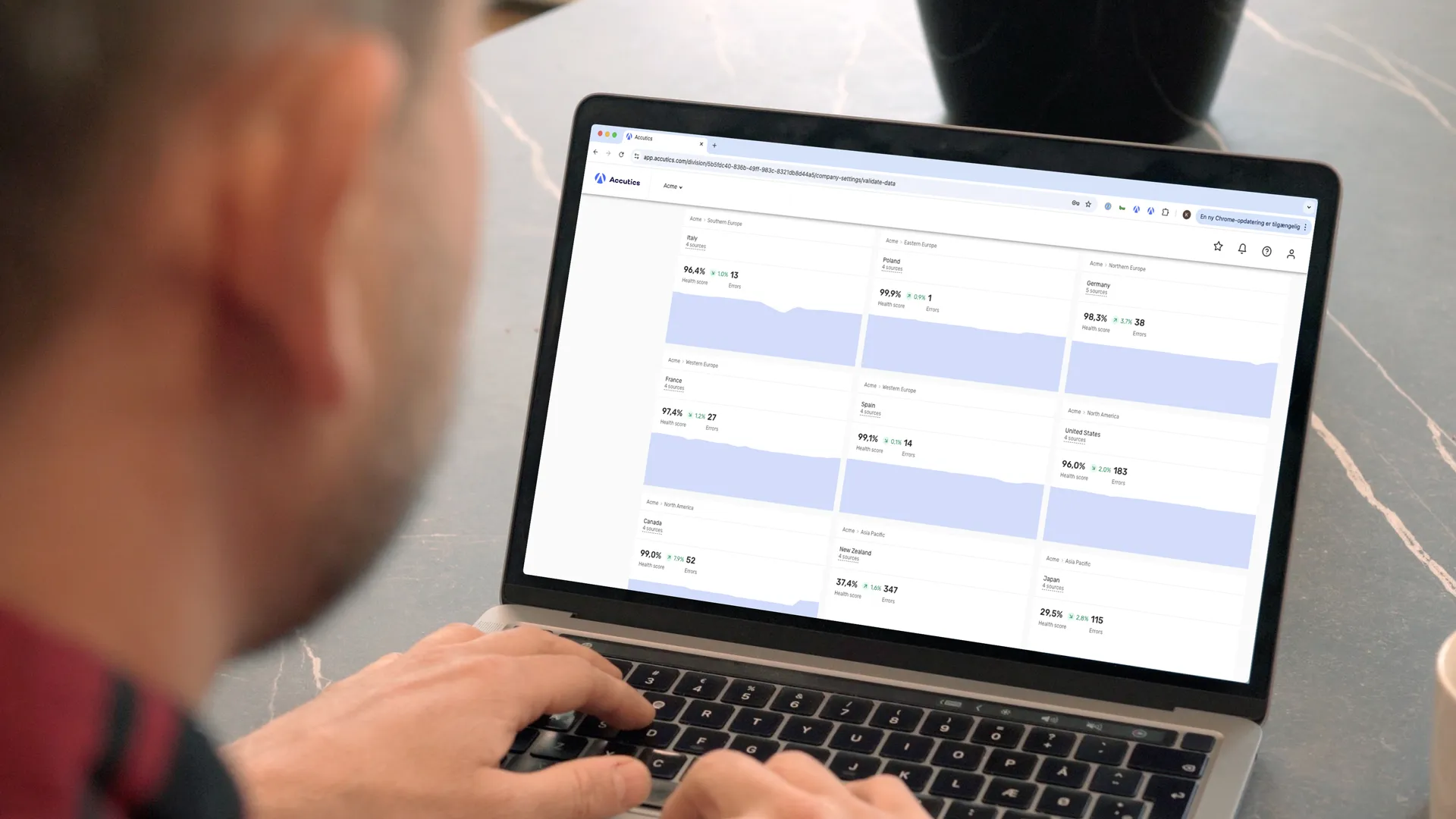
With campaign data defined, structured, and validated at the source, reporting becomes more comparable by design. Global and local teams can align on trusted KPI definitions and gain a clearer view of performance across brands, launches, markets, and channels.
Faster optimisation across brands and investments
With structured and validated data flowing from the start, FMCG teams can identify campaign success faster, reduce operational friction, and make stronger investment decisions across media, shopper, and brand activity.
Proving marketing impact in FMCG
Accutics helps organizations build reliable campaign data that improves comparability, reporting confidence, and execution consistency across brands and markets.

Confidence in reporting across markets
At Saxo Bank, Accutics standardized campaign tracking across 15+ markets, enabling the granularity required for reliable attribution and performance measurement.
“We operate across +15 markets and a complex martech setup and it's imperative to have consistent campaign tracking that allows us the granularity we need for attribution and measuring campaign effectiveness. This would not be possible without Accutics.”
Nikola Krunic
Media Analyst Lead, Saxo Bank
Structure that scales across teams
For a Fortune 100 Insurance Company, Accutics aligned campaign data across teams and markets, reducing execution friction and accelerating fixes that led to significant performance improvements.
“Accutics has really changed the way we take feedback from stakeholders and sped up the turnaround time on campaign fixes. This helped us get +85% better campaign performance in the US.”
John Brown
Analytics Manager, Fortune 100 Insurance Company
Data you can trust from day one
With Accutics in place, UNSW Sydney enforced data quality directly in execution, rapidly improving tracking completeness and trust in reporting.
"We experienced +46% improvement on tracked traffic, reaching a click-to-visit completeness score of 97% within the first three months. This has truly been an eye-opener.”
When data is reliable, marketing can scale decisions with confidence
FMCG organizations need a consistent way to understand marketing performance across brands, regions, and teams.
When campaign data is structured and comparable, marketing gains the clarity to align global and local stakeholders, improve reporting confidence, and guide investment decisions with data leadership can trust.
Marketing teams gain a more consistent view of campaign performance across markets and brands
Leadership can compare investments more confidently across regions and activities
Reporting becomes easier to align across global and local stakeholders
Marketing can demonstrate impact in planning, investment, and growth decisions
FAQ
Why is it difficult to measure marketing performance across FMCG brands and markets?
FMCG marketing operates across multiple brands, markets, agencies, and business units. When campaign data varies across these environments, performance becomes difficult to compare, making it harder to understand what drives results across launches, shopper programs, and media investments.
How does inconsistent campaign data impact cross-market decision-making in FMCG?
When campaign data is fragmented, reporting often relies on manual fixes and inconsistent KPI definitions. This limits the ability to compare performance across regions and brands, making it difficult to guide investment decisions and align global and local teams.
How can FMCG teams measure marketing performance across brands, launches, and channels?
Measuring performance requires a shared campaign framework that standardizes naming, structure, and metadata across brands, markets, channels, and partners. With consistent data, teams can compare performance across launches and activities and better understand what drives results.
Why do Marketing Mix Modelling and incrementality analysis struggle in FMCG?
Marketing Mix Modelling, incrementality, and advanced analytics depend on structured and consistent input data. In FMCG, where activity spans brand, shopper, and media investments across markets, inconsistent campaign data reduces the reliability of insights and limits their usefulness for decision-making.
What changes when marketing data is structured and validated at the source?
When campaign data is consistent from the start, FMCG teams gain a clearer and more comparable view of performance across brands, markets, and investments. This enables stronger alignment between global and local teams and supports more confident planning, optimisation, and investment decisions.