
No-nonsense marketing and analytics best practices from international industry leaders, straight to your inbox
Many marketing teams optimize effectively within individual channels, yet struggle to turn those wins into organization-wide performance. The constraint is not tooling, but ownership of how marketing data is defined, governed, and used across the business.

Marketing is in transition.
Enterprises are investing heavily in paid media, new platforms, and increasingly sophisticated reporting. At the same time, many struggle with misalignment, fragmented dashboards, and a recurring sense of starting over whenever a new agency, channel, or market is introduced. The root cause is rarely a lack of talent or effort. It is the absence of clear ownership of marketing data.
Ownership, in this context, means control over how data is tracked, structured, validated, and governed across the organization. The way enterprises address this now will determine their ability to maintain performance, adapt to market change, and compete effectively over time.
Across enterprise marketing organizations, the problems are consistent. Reports look different across markets and channels. Dashboards fail to align even when built on the same tools. Global teams optimize toward one objective while local teams optimize toward another. Agencies deliver strong results, yet take critical knowledge with them when contracts change. Performance improves locally, but halts at enterprise level.
This does not happen because teams lack commitment. It happens because ownership of marketing data is unclear, leaving data as something that must be explained rather than something that can be confidently relied upon.
When agencies define naming conventions, tracking structures, and reporting logic, organizations often prioritize short-term speed over long-term control. The cost appears later through resets, rework, and lost focus. Owning the platform account may feel sufficient, but if the data does not align with internal business objectives, optimization remains channel-specific rather than aligned to business outcomes.
Agencies are not the problem. They are hired to execute and optimize within individual channels. Responsibility for data ownership sits with the organization.
Many organizations begin by reclaiming ownership of their paid media accounts. This is a necessary and important step, but it is only the starting point.
True ownership requires alignment on how campaigns are named, what each field represents, which values are permitted, how compliance is enforced, and how this scales across markets, partners, and time. Without this, inconsistencies simply move into accounts that carry the organization’s logo, while the underlying fragmentation of data remains.
Organizations that consistently outperform their competition and peers tend to share five core capabilities.
High-performing organizations define structure centrally while allowing agencies to operate freely within that structure. This creates coherence when agencies change, accelerates onboarding of new partners, reduces dependency on individuals, and establishes a shared language across teams. This type of ownership removes friction, Not flexibility.
When markets and channels apply different interpretations to the same campaign concepts, reporting becomes a negotiation rather than a source of truth. A shared taxonomy ensures consistent meaning across teams, alignment between global and local views, functional roll-ups, and strategic clarity. This is what turns local optimization into enterprise learning, particularly when the logic is co-developed with agencies and anchored in overarching business objectives.
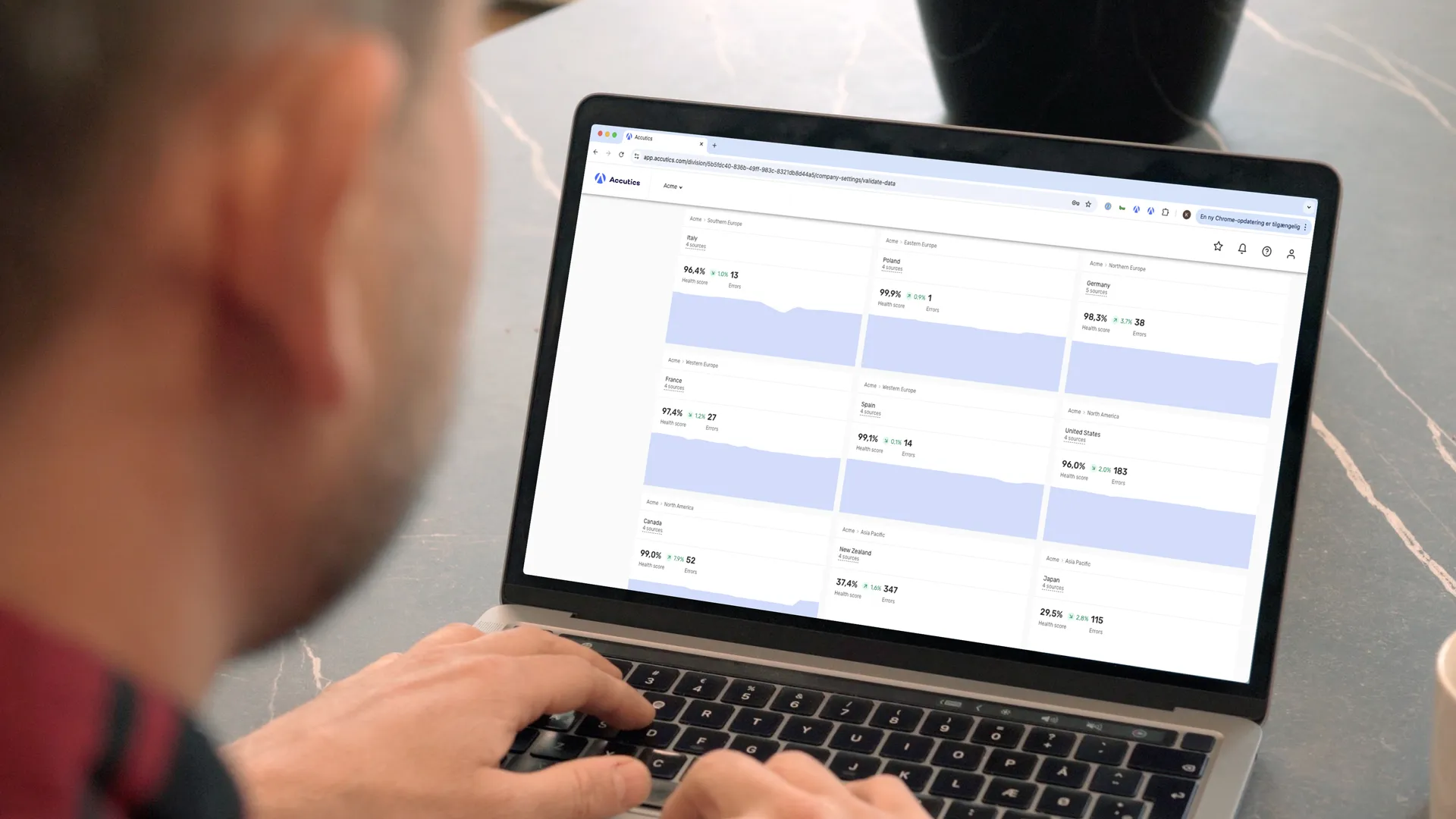
Many organizations assume compliance, but in practice errors are introduced continuously through manual work, exceptions, and platform-specific behavior. Without ongoing validation, issues are often discovered only after budgets are spent. Continuous validation makes data quality visible while campaigns are live, reducing reliance on fixes, assumptions, and explanations after the fact.
Fragmented data forces interpretation. Governed data enables confidence. When data is consistent and reliable, dashboards become trustworthy, decisions accelerate, and conversations move from questioning accuracy to deciding next actions. Confidence in performance is not a soft benefit; it is a competitive advantage.
Paid media is where most enterprises begin, but it is not where the journey ends. The greatest value emerges when the same data structure supports email and CRM, creative intelligence, QR codes and offline activations, retail and marketplace media, and future channels that do not yet exist. Ownership today is what enables alignment tomorrow.
Marketing teams are under pressure to demonstrate impact, scale learning, and do more with the same or smaller budgets. That is not achievable when every market optimizes in isolation, every agency applies its own logic, and every report requires interpretation.
The organizations pulling ahead are not the ones with the most dashboards. They are the ones with marketing data maturity and a clear operating model behind it.
Enterprises that take ownership of their marketing data do not slow down execution, and they do not start from scratch. They build a foundation that allows teams, markets, and agencies to perform better together.
Marketing data ownership means having clear control over how data is defined, structured, validated, and governed across the organization. It goes beyond owning platform accounts and includes shared rules for naming, allowed values, compliance, and scalability across teams, markets, and partners.
Because optimization happens in isolation. When each channel, market, or agency operates with its own logic, results may look strong locally but cannot be compared, rolled up, or trusted at organizational level. Without shared structure and ownership, performance does not scale.
Agencies play a critical role in execution and channel optimization, but they are not positioned to own long-term data structures. Ownership must sit with the organization to ensure continuity, alignment with business objectives, and resilience when partners or teams change.
Data governance is one mechanism of ownership, not the whole concept. Ownership defines who is accountable for the data model and operating principles, while governance describes how rules are enforced and maintained. Without clear ownership, governance becomes reactive and inconsistent.
As soon as marketing operations begin to scale across multiple channels, markets, or partners. The earlier ownership is established, the easier it is to maintain alignment and avoid rework. Delaying ownership often means fixing structural issues later, when they are more costly and disruptive.
.svg)